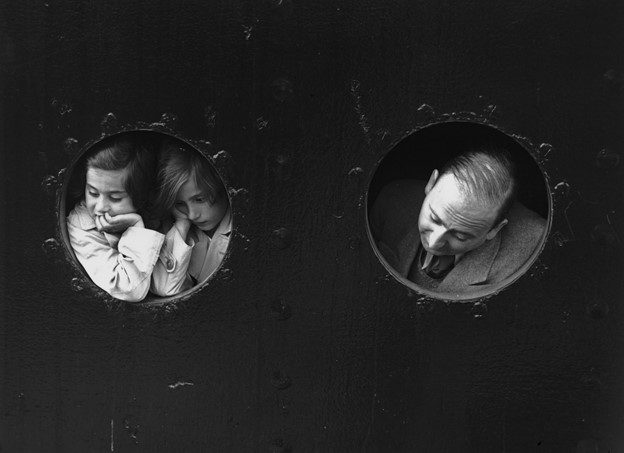
In honor of Latvian Independence Day, the Shamir Society, the Riga Ghetto and Holocaust Museum in Latvia, in collaboration with the Jewish Museum and Tolerance Center, present the exhibition “Closed Borders. Latvian essay".
4 years ago, the SHAMIR society began working with archival documents - journals of the Ministry of Internal Affairs of Latvia, which registered refugees in 1934, 1938-1939. Later we were sent personal stories of Jews from Germany and Austria who found refuge in Latvia in the 1930s. In 2019, an agreement was signed with the Jewish Museum in Moscow, which created the “Closed Borders” exhibition. It was agreed that we would make an exhibition in Riga based on the Moscow drawings and supplement it with our materials. In 2020, the first part of the exhibition was opened, and now a year later, the part dedicated to Latvia is available for viewing. Exhibition “Closed Borders. Latvian Essay” is dedicated to the migration crisis in Europe on the eve of World War II. By 1938, hundreds of thousands of Jews wanted to leave Hitler's Germany and annexed Austria; however, the world's major powers refused to accept refugees. The Latvian addition to the exhibition includes a story about Jewish refugees who arrived in Latvia from Germany and Austria in the second half of the 1930s. The very first refugees came under the label “political”; permission to enter required a guarantee; among the guarantors were deputies of the Sejm and public organizations. Upon entry, refugees gave an obligation not to engage in political agitation, and a period of three months made it possible to obtain visas to other countries; it is known that most of those who left went to Palestine. Refugees often found refuge in pre-war Latvia, staying here for a long time. The presented documents change the perception of the policy pursued by Karl Ulmanis as strictly anti-Jewish. At the exhibition it is possible to learn about some of the fates of German Jewish refugees in Latvia and see photographs from the private archives of their relatives. The exhibition also displays copies of magazines with lists of refugees. The exhibition opens on November 19.
Idea and management: Menachem Barkahan Assistance in working with archives: Rita Bogdanova Design adaptation and design: Tatjana Jersova Translations: Alexey Tereshchenko Agnese Beļajeva Texts: Natalia Krupenina Vita Shaldova I Literary editing (rus): Natalia Krupenina Proofreading (lv): Ilze Šteina Assistant: Jennet Italmazova
The exhibition was created with the support of Uniting History, LNK charity fund, Latvijas Republikas Kultūras ministrija. The preparation used materials from private and state archives, including the Latvian State Archive, the Jabotinsky Institute in Israel, as well as the archives of the Gurari, Kadner-Jacobson, Friedman, Sarig families.